If you will be in the Missoula, Montana are at the beginning of October and you are interested in issues that impact cultural preservation, nature, and the environment, then you may want to visit the 3rd Annual Montana CINE International Film Festival. This festival will be held on October 5, 6, 7, and 8, 2006, and it is hosted by the International Wildlife Media Center, the same people who put on the International Wildlife Film Festival. For more information on attending please keep reading.
What This Festival Is About
The 3rd Annual Montana CINE International Film Festival is a film festival that explores the cultural issues that impact nature and the environment. Issues like culture, conservation, politics, agriculture, urban sprawl, society, industry, and war will be discussed in regards to their impacts on the natural world. Activities will center on the festival’s mission of understanding these issues better as they relate to the health of the world’s ecosystems.
Events
Like the International Wildlife Film Festival, the Montana CINE International Film Festival will offer several venues of interest for both filmmakers and the public. Public screenings, discussions, workshops, outings, and parties will be scheduled for the festival’s attendees. Schedules for these events, as well as activity descriptions will be made available in mid-September.
The public screenings of the winning films entered in the CINE film festival will be shown at the Historic Roxy Theater. This theatre is located at 718 S. Higgins, Missoula, Montana. A list of times, film titles, and film descriptions will be available at http://www.wildlifefilms.org by mid-September.
Discussion and workshops will also be offered to festival attendees. These programs will focus on specific topics, and they will be moderated by an industry professional. Information about the discussions and workshops can also be found online at http://www.wildlifefilms.org, as information becomes available.
Parties and activities are also a highlight of this festival. These parties will be held at various locations around Missoula, and each will have its own unique theme, attractions, and activities. The festival’s parties are great for meeting with the filmmakers, meeting people who have an interest in environmental issues, and just experiencing western hospitality. Tickets for the parties can be bought at the Roxy Theater, or by contacting the CINE Festival coordinator.
Attending the CINE Film Festival
The price for attending the events held during the CINE Film Festival will vary depending on the type of ticket you buy, your age, and the event you want to attend. General Admittance tickets for viewing a screening will be $6 for adults, $5 for students with a valid student ID, $5 for seniors 65 and older, and $3 for children under the age of 12. If you would like to buy a day pass, which is good for attending all the workshops, discussions, parties, and screenings for a specific day, then the price will be $15. If you would like to just see the screenings during the festival you can purchase a screening pass for $25, which allow you to see as many screenings as you want during the festival. If you want access to everything during the festival then you can purchase a festival pass for $50. Finally if you want to buy a ticket to a specific event or party you will need to contact the Festival directly for prices.
Contact Information
If you have more questions, or if you would like to buy your tickets before the festival please contact the CINE Festival at:
Montana CINE International Film Festival
718 S. Higgins Ave.
Missoula, Montana 59801
(406) 728-9380 phone number
(406) 728-2881 fax number
iwff@wildlifefilms.org
http://www.wildlifefilms.org
Wednesday, March 16, 2011
Montana CINE International Film Festival in Missoula, Montana

The Scope of New York 2006 Art Fair
“Things have gotten so bad, lately, that people are in revolt against life itself.” – Kurt Vonnegut
There is art, and then there is…
That is the overwhelming sentiment guiding the omnivorous visitor as he meanders, craving enlightenment, up and down the cluttered corridors of the Scope New York 2006 art exhibition.
A hairy, overstuffed goon stands guard in one of the first stalls, his faceless head a reminder of the content (or not) that lies beyond the graffiti festooned portals, his celebrity a result only of his creator’s name. The walls are draped in an uneven, oriental-looking cardboard tapestry (one of the better pieces, by the way) offset by a pile of photographs leaning against a flimsy, badly whitewashed partition. These technically competent offerings just might snag the interest of the virginal visitor who has never glimpsed the works of Diane Arbus. A progression of wide yellow stripes on the concrete fortification adjacent to this opening scene were actually painted by the work crew, the same one that will tear a hole in it once the crowds have fully dissipated – so I am told by security personnel as I stare intently at the cement in search of meaning.
Three menacing, punkily clad, life-sized and high-powered-weapon wielding papier-mâché figures (secular Iraqi insurgents, perchance?) occupy a stage that warns the unwitting voyager of what is yet to come. A glance to the right reveals the disproportionate oral sex series, artfully done but equally artful in its lack of substance – an internet porn site must have inspired the proficient sketcher. Painfully distorted, tear stained puerile faces take up yet another space in oversized photographic zeal that may have been more appropriate in a magazine titled: “How to Deal with Your Spoiled Brats,” perhaps a suggestive subtitle for the whole Scope affair, as well.
A few labored steps forward and voila! The masterpiece unveiled: A crude oil rendering of a certain Nazi Chancellor fornicating with a swine to which an astute observer behind me, certainly just barely legal for barroom admittance, remarked enthusiastically: “Awesome!” Astonishing, indeed, was the “artist’s” audacity to present this image as though it possessed a single iota of originality or, the vaguest resemblance of simple forethought.
Few and far between were works from which one might, in fact, catch a glimpse of artistic talent coupled with a search for substance. A series of drawings with abstract geometric and topological qualities (vaguely reminiscent of Klee), a sequence of non-figurative paintings on wood and an excellent collection of acrylics inspired, in equal measure, by orchids and ancient Chinese technique were especially noteworthy. Nevertheless, the outright violence and wanton hostility of the great majority of regurgitated junk culture supplied by the “exhibitionists” helped make the experience one of indelible disgust. But what can one expect from a mindset that looks to Fear Factor and South Park for cultural direction? What can one say when artistic endeavor is pulverized to the obscene ogling of wretched lives alongside the elevation of hopelessness and topped with the idle pursuit of momentary gratification?
The old adage garbage in, garbage out seems to fit as snuggly as a lambskin glove the hands of these tots of trivia. Were there reason and rhyme for the outbursts of gratuitous cruelty disguised as art, then one might even be left to ponder. There are countless examples of art employing carnage as a mere medium to put forth a broader and more significant message. However, the absolute want of rationale seems to be exactly the point: “we are doing this because we can” is proffered in the true spirit of the spoiled adolescent who thinks he is entitled to something other than a swift kick in the rump.
Talent is never enough. Talent without core is a waste of time, space and energy for both spectators and artists. One would hardly praise Graham Greene for writing brilliantly tailored laundry lists. The hackneyed approach to pointless violence is neither a social statement nor a cultural observation; it is an excuse not to think for oneself; it is the scatterbrained copycatting of a devil-may-care, pseudo anti-intellectual pose popularized by the irresponsibly frivolous, make-believe world of the affluent strata. Random brutality exists in our society and it is the duty of art, as an ultimately human manifestation, to speak out against it, deterrent that it is to the evolution of our species, but never to trivialize and glorify it, so as to wind up co-opted by the same system that they, the self-proclaimed artists, pretend to despise.
<i>Seabiscuit</i>: A Fantastic Film for Any Type of Movie Viewer

source
Seabiscuit is an inspirational film that stars Tobey McGuire in an even better acting job in my opinion that Spiderman. The film is great in the setup because it really tells about the history in the time which the film was meant to be set in. When the film describes the Great Depression Era that ordinary citizens had to suffer through, the film uses black and white picture with a background voice instead of using the actors' voice.
The film starts off with the story of Tobey McGuire who plays the role of horse racing jockey Red Pollard. He started off by betting on horse racing and win. He then became a jockey. He has to work very hard to make ends meet as he races horses as has very little success initially. When he looses a race by the nose of a horse, he is beaten by the horse's owner and loses his job.
The other ongoing story is that of Jeff Bridges, a wealthy man who starts off making his fortune in the car business. He is able to perfect the parts of a car and make it run better using the Model T engine. He is liked by the public and has a loving family. However, tragedy strikes when his son drives one of the cars and is killed by he runs into a ditch. Bridges' wife also passes away, causing him great sadness and grief.
He closes his car business. His fortunes change when he meets a woman at a horse racing track and falls in love with her. On one night, he also meets a trainer in the woods, played by actor Chris Cooper. Cooper cares deeply about animals and knows how to take care of horses. He and Bridges' character, Charles Howard become good friends and Cooper helps Howard pick out a horse to buy. He settles on a horse named Seabiscuit who is a wild horse who a lot of attitude but has been unable to win any track races.
Seabiscuits history is told by the film as a horse that was used as a training horse, to build up the self esteem of other horses by losing races on purpose by being held back on the track. When Cooper and Howard go looking for a jockey, Cooper finds Red Pollard who has attitude issues of his own after he has to walk a horse in order to get paid.
Cooper immediately likes Pollard's attitude despite the fact that Pollard is a little too big to be a horse jackey. Cooper is able to train Seabiscuit by having him roam free to see how long and how far he can go which amazes Cooper. Seabiscuit and Red Pollard are able to have some initial success. However, when Pollard looses a race by a close margin, Cooper finds out that Tobey McGuire is blind in one eye from his days as a fighter to earn money.
Instead of getting a new jockey, Mr. Howard sticks with Pollard and makes him part of his family. Pretty soon Seabiscuit is winning races again and Mr. Howard is back in the public eye. To stir up some drama, Mr. Howard creates talk of a match race which is a one on one horse race. Mr. Howard wants Seabiscuit to face War Emblem, a horse that has won a triple crown.
War Emblem's owner from New York feels that his horse is in an entirely different class than Seabiscuit and his horse is far superior. He denies all of Mr. Howard's requests for a match race even after Howard calls him out in the newspaper and radio.
Mr. Howard enters Seabiscuit in all of the races that War Embled is on to try and get the two horses to race each other but War Emblem dropped out of all the races. Finally, the owner of War Emblem agrees to a match race. The horse racing track is to be opened to the public to accomodate the mass amounts of people who are anxious to see this show down.
To prepare for the race, Cooper decides to retrain Seabiscuit from being a horse that would make a late surge towards the end of the race to being a horse that gets out of the gate quickly and gets a lead early in the race. They practice this at night with a fire engine bell so that the media doesn't notice their strategy for the big race.
Days before the race, Red Pollard is approached by a friend of his asking if he could just ride his horse to get media attention since he is in desperate need of money. Pollard agrees but when he rides the horse, a car engine backfires, scaring the horse and causes Red Pollard to fall off the horse and break several bones.
This makes him unable to ride Seabiscuit in the big race. Red Pollard's friend who is a fellow jockey is brought in to race Seabiscuit. On the big day of the race, the horse race is initially close. However, towards the end, Seabiscuit pulls ahead and wins by many strides. Seabiscuit goes on to win another race or two before the horse breaks a bone in its leg and is unable to race.
Inspiration is gathered from Seabiscuit and Red Pollard as they learn to heal from their injuries and slowly return to racing form after everyone says that their racing careers are over. Seabiscuit and Red Pollard ride into the race with joy upon Tobey McGuire's face.
Seabiscuit is an inspirational film about overcoming the odds and challenges that life presents to you. It deals with the Great Depression and how it affected everyone in poverty. And it also deals with horse racing and how it is more than just a game where betting takes place. I loved this film and recommend it to any movie viewer.
Friday, March 4, 2011
The Best Baby Showers Gifts to Give

baby seats australia
When your friend announces the wonderful news of a new arrival the thought always turns to what you want to buy the baby that will be of most use. Having had my first baby and 2 showers I received several gifts that were total life savers and am forever in debt to the people who bought them.
The coolest thing I received was a Fischer Price Oceans of Wonder cradle swing, this is the best gift I could've ever asked for, it has 2 ways to swing, plays melodies has lights as well as 10 different speeds. I was able to use this from day 1 up until my little guy got 25 pounds. This was truly awesome as the baby was able to nap and the fish and lights held his attention long enough for mom to get housework done.
Diapers are always a great gift because parents go thru so many, the trick is to give a few packages in the larger sizes as many new parents receive so many smaller sizes and babies grow so fast. A case of diaper wipes is also helpful as they tend to last longer.
The Fischer Price Deluxe Jumperoo is also a great gift, the baby can start using around 4 months of age, it helps strengthen their legs and provides plenty of entertainment. I found this to be a great way to get a moment of peace when having a hectic day.
The Womb Bear is also great to help baby sleep at night, it makes the sound of a heartbeat and reminds baby of time spent in the womb.
Gift cards are also great as their are many last minute things that parents need or want, and can be used to buy many different things.
These are some great suggestions and good luck with the shopping
Sunday, February 27, 2011
A Look at Some Helpful Photography Websites With Beginner Photography Tips and Advice For Pros

Photo Credit: celtics baby clothes
When I was in high school I found my moms old Nikon camera. I always wanted to get into photography but didn't know anything about it. So I got a job at a photo lab and took that camera with me everywhere. I'd bring the film into work the next day to see what I had learned and how the photos turned out. When prom time came around a bunch of my friends wanted me to do their prom pictures. So I borrowed a nicer camera from a friend and charged my friends to shoot their prom pictures. I made enough money to buy my first camera. After that it was a start of a dream
Since then I have done paintball photography for a world wide magazine, been a sports photographer, wedding photographer, school photographer, child photographer, and every kind of photographer in between. These are a list of sites I used when I first started out that I found to be invaluable.
www.photographytips.com
Great site that is some what member based. You can look around most of the site for free but if you want to access everything there is to see you can sign up online for only $5.00 a month. There are great articles on subjects from composition, to light, to how to use your flash. There are also some great galleries so that you can learn by example. Every page is filled with helpful information and numerous pictures that help explain the topic of the article.
www.photosecrets.com
This site may not be graphicly pleasing but it covers its bases. The tips are divided up into beginner, intermediate, and advanced. The beginner section covers topics like what kind of camera and film you should buy as well as how to take better pictures of people. he intermediate section talks about quipment, hot to tackle more complicated subjects, and travel photography. The advanced section is more about selling photos, more details about film, and the use of filters. The only thing I Don't like is there are no photos on any of the pages. I think a photography site should have pictures!
www.kodak.com
As one would expect this site covers everything that is photography. This site is easily to scroll through and has a wide variety of topics. Learn the best way to photograph your baby, take better vacation pictures, or photograph your pet. The site also covers topics like printing pictures, sharing pictures, and getting started in digital. The photographs on the site are great and offer some step by step examples of topics discussed in the articles. There are also interactive demos on different subjects that are worth checking out. You can even research information on
film and digital cameras.
www.photonhead.com
This site offers a great tool for the photographer who wants a better understanding of shutter speeds and f-stops. This is the hardest concept to grasp when starting out=t in photography. I know, Ive been there. No matter how many times its explained you just Don't quite get it. This site offers a tool where you can set shutter speeds ad and f-stops in any combination and see what the effect would be. You have a sample photo to your left and to your right you can see what it would look like with your f-stop and shutter speed combo. This is a great tool that helps you learn about f-stops, shutter speed, focal length, and depth of field.
www.betterphoto.com
This site offers online photography course for the photographer who wants to become a professional. The online classes are rated for skill level of the photographer. Classes usually include weekly assignments and have the course instructor personally look over your work. Course range from the business of photography to how to use photoshop and many other topics. Classes vary in price. A 8week class could be between $200-$400. If your aren't happy with your course by the third assignment there is a money back guarantee.
www.scphoto.com
This is one of the best sites I can recommend for young photographers who need direction. This site was created by a high school photography teacher. Its is a free lesson plan that offers homework for photographer. The best thing it offers is assignments on different areas of photography. There are assignments for learning magazine photography,lighting, concepts, and much much more. There are list of words and terminology you should new. Its basically a free high school photography class. I went through the whole lesson plan when I was teaching my self photography and highly recommend it.
Photosecrets.com
Photographytips.com
Kodak.com
Photonhead.com
Betterphoto.com
Baby Photos and the Art of Photography

photo source
"Seize the Moment" This is one of my favorite sayings. How often do we take advantage of the MOMENT? The moment is instantaneous. What happens right now will not happen again, ever! Will you remember the moment?
Photography is the art of capturing an image of that moment. It could be a face, a plant or a mountain. It could be something that will be there tomorrow but will look different or it could be something that won't be seen again. I read in a comic book once of a conversation between a father and son. The young son asked his father why old photos were always in black and white and new photos were in color? His father said there was always color film in the old days, but the world was only in black and white then! It was funny but some of our most famous photography "artist" worked in black and white such as Ansel Adams. He and so many others were artists that couldn't make up their work but had to capture it at the right instant of time.
I was going through some photos with my wife the other day. Some of them would take my breath away. They were images captured in time of babies in our family. Some of these babies are now 5, 8, 10, 14, 17 years of age. They are my children, nephews and nieces. Some of them are of my wife and her sisters. They're baby pictures! They are an instant caught in time. They were either taken by my in-laws or given to them as gifts. They may not have been present at the time the photo was taken but they had that image of that instant in time to carry with them until they died. These images were no different than the images that Ansel Adams gave me as a gift when he photographed San Francisco bay where the Golden Gate Bridge is before it was built. He gave me a memory that I could not have had otherwise. My family and my sister-in-laws' families gave my mother -in-law and father-in-law memories that they would never have had if it weren't for photography.
Even if you aren't a great photographer, a picture is still worth a 1,000 words. When a newborn baby comes home from the hospital and the family and extended family come by to see him or her, what comes out? Of course, the cameras come out and start snapping. I learned two schools of thought from photographers that I took courses from. One was in a roll of 36 exposures, 34 better be the top quality photos that you intend to sell. The other photographer taught that in a roll of 36 exposures, expect 2-3 quality photos that are worthy of selling. What I learned from this is spend your time taking posed photos but keep snapping for candid photos.
If you are taking photos of babies or children, take your time for both types of photos. I personally do not like posed photography but that's me. I prefer to capture a child that is at play trying to solve a problem or just being natural. I like the expressions when they are deep in thought or interacting with other children. I found a photo of my son that I took through a car window when he was five holding his hand up with his fingers stretched out. That photo is so memorable to me because I sent it to my mother before she passed away. It was exactly the same photo that my mother took of me when I was five years old.
May I suggest that you seriously consider studying photography to get a better understanding of the capabilities of using a camera properly? If you are just starting out, you need to start with the basics and work from there. Here is a good site to learn various aspects of photography from: http://www.photographytips.com/ For some detailed photography, study someone like Ansel Adams and look at this website: http://www.anseladams.com/
Saturday, February 26, 2011
Photography Tips and Tricks
source,photo source
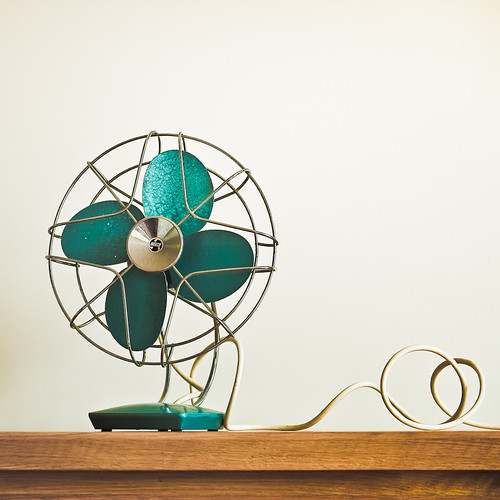
Photography isn't just about making memories, it's about art. Be artistic. Here are a few tips and tricks to help you make those photos, picture perfect.
To make those dull photos turn into works of art, consider these questions:
Decide if you want the full subject, half, or even a close up. How much background do you want, or even foreground? Exactly how close do you want that close up? What details do you want to focus on? Do you want a vertical, horizontal, or tilted photograph? What angle do you want? What's the best lighting? What background do you want to use?
1. Placing the subject of interest. Choose how much of the subject you want photographed. (Example: you want full body, half body, or face shot.) If your subject fills the frame then it's okay to center it. If you are trying to get more of the background, try placing your subject to the right or left in the viewfinder. With a horizontal (laying down), try to place them at the top for more foreground, or at the bottom for more background. And you could even tilt the camera for a more funky picture. It all depends on what part of the scenery you want visible in the picture. Maybe you want that tree to your left and your subject to the right. Or the patch of flowers in front and the mountains in back. (I find it best to take my time and take shots of each possible way and several different poses. This way I know I'll find the best photograph with the most potential.)
2. Don't center. The circle, plus sign, or brackets in the middle of your viewfinder is for focusing and isn't necessarily for centering the subject. Placing your subject in t he circle could leave you with a lot of empty and useless space on your photograph. Too much background and not enough subject. If your subject fills the frame then it is okay to center them. (Sometimes you just have to ignore the focus points and concentrate on your subjects placement in the frame instead.)
3. Camera angles. Walk around the subject, shoot from all angles and sides. This will help you to get the best lighting, background, and different aspects of the subject. You will want to find the best angle for all three. Pick a background that will not distract your viewers from the subject of interest. (I choose my backgrounds to where there's not much clutter. Sometimes I will use a plain sheet or blanket and place it behind the subject, but making sure it does not clash or blend.)
4. Reflectors. In some situations you just can't get enough light or you perhaps you just want more. To use a light reflector, place it in a position where it reflects light onto the subject without it getting in the frame. Use this if your shot is coming out too dark or there are too many shadows. On night shots that you need more than your flash can put out, place a lamp (or several) near your subject, but out of sight, and use the light reflectors to bounce from the lamps to where needed. (Some homemade light reflectors can be real cheap to make. You could use white cardboard, or if you can't find this, then simply take any piece and paint it white. For more light, place tin foil over your piece of cardboard, smooth it out, and reflect where needed.)
5. Shading. Using the same piece of cardboard as mentioned above, you can use this to block the light as well. You could make this easier by painting one side white and the other black. Or just place the piece in front of the lamp or sun to dismiss light from your subject. On most cameras you can use a sunshade for the lens, some cameras come with this, some you buy separate. This won't keep light from your subject, but it will block the light from causing a flare effect on the outcome of your photograph. The sunshade just clicks into place around your lens, and keeps the lens safe from any glaring.
6. Outside daylight. Direct sunlight is when you place the sun behind the camera, but in front of the subject. Using direct sunlight can cause shadows on the subjects face and possibly their eyes squinting. Back light is when the sun is behind the subject and in front of the camera. This will lighten the photo and cause much softer features on the subject.
7. Preventing red eye. Red eye is caused when the flash is too close to the lens. Ways to prevent this are: Attach a larger flash to your camera, t his way the flash is further from the lens. Or if buying a camera, look for one with the flash located far from the lens. Try getting closer to your subject when needing the flash. (Before I bought my camera with built in red eye correction, I had to use a photo editing program to correct these problems. I was even scanning my pictures and still having to edit when I was using my film camera that was hopeless against red eye.)