Sunday, February 27, 2011

A Look at Some Helpful Photography Websites With Beginner Photography Tips and Advice For Pros


Edinburgh Photography, Calton Hill by John Gilchrist


Photo Credit: celtics baby clothes


When I was in high school I found my moms old Nikon camera. I always wanted to get into photography but didn't know anything about it. So I got a job at a photo lab and took that camera with me everywhere. I'd bring the film into work the next day to see what I had learned and how the photos turned out. When prom time came around a bunch of my friends wanted me to do their prom pictures. So I borrowed a nicer camera from a friend and charged my friends to shoot their prom pictures. I made enough money to buy my first camera. After that it was a start of a dream

Since then I have done paintball photography for a world wide magazine, been a sports photographer, wedding photographer, school photographer, child photographer, and every kind of photographer in between. These are a list of sites I used when I first started out that I found to be invaluable.


www.photographytips.com
Great site that is some what member based. You can look around most of the site for free but if you want to access everything there is to see you can sign up online for only $5.00 a month. There are great articles on subjects from composition, to light, to how to use your flash. There are also some great galleries so that you can learn by example. Every page is filled with helpful information and numerous pictures that help explain the topic of the article.

www.photosecrets.com
This site may not be graphicly pleasing but it covers its bases. The tips are divided up into beginner, intermediate, and advanced. The beginner section covers topics like what kind of camera and film you should buy as well as how to take better pictures of people. he intermediate section talks about quipment, hot to tackle more complicated subjects, and travel photography. The advanced section is more about selling photos, more details about film, and the use of filters. The only thing I Don't like is there are no photos on any of the pages. I think a photography site should have pictures!

www.kodak.com
As one would expect this site covers everything that is photography. This site is easily to scroll through and has a wide variety of topics. Learn the best way to photograph your baby, take better vacation pictures, or photograph your pet. The site also covers topics like printing pictures, sharing pictures, and getting started in digital. The photographs on the site are great and offer some step by step examples of topics discussed in the articles. There are also interactive demos on different subjects that are worth checking out. You can even research information on
film and digital cameras.

www.photonhead.com
This site offers a great tool for the photographer who wants a better understanding of shutter speeds and f-stops. This is the hardest concept to grasp when starting out=t in photography. I know, Ive been there. No matter how many times its explained you just Don't quite get it. This site offers a tool where you can set shutter speeds ad and f-stops in any combination and see what the effect would be. You have a sample photo to your left and to your right you can see what it would look like with your f-stop and shutter speed combo. This is a great tool that helps you learn about f-stops, shutter speed, focal length, and depth of field.

www.betterphoto.com
This site offers online photography course for the photographer who wants to become a professional. The online classes are rated for skill level of the photographer. Classes usually include weekly assignments and have the course instructor personally look over your work. Course range from the business of photography to how to use photoshop and many other topics. Classes vary in price. A 8week class could be between $200-$400. If your aren't happy with your course by the third assignment there is a money back guarantee.

www.scphoto.com
This is one of the best sites I can recommend for young photographers who need direction. This site was created by a high school photography teacher. Its is a free lesson plan that offers homework for photographer. The best thing it offers is assignments on different areas of photography. There are assignments for learning magazine photography,lighting, concepts, and much much more. There are list of words and terminology you should new. Its basically a free high school photography class. I went through the whole lesson plan when I was teaching my self photography and highly recommend it.

Photosecrets.com


Photographytips.com


Kodak.com


Photonhead.com


Betterphoto.com


Baby Photos and the Art of Photography


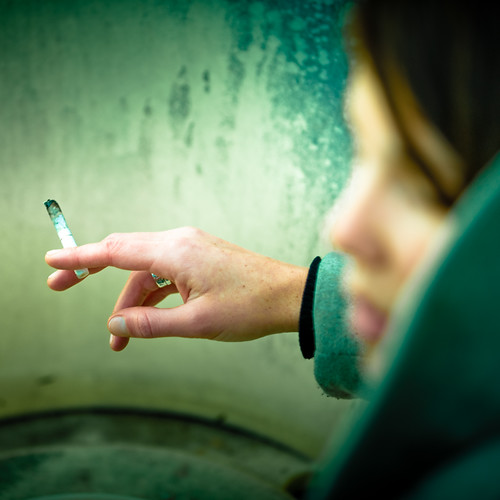
Cuba Gallery: Portrait / smoke / hand / green / texture / woman / photography by ►CubaGallery


photo source


"Seize the Moment" This is one of my favorite sayings. How often do we take advantage of the MOMENT? The moment is instantaneous. What happens right now will not happen again, ever! Will you remember the moment?

Photography is the art of capturing an image of that moment. It could be a face, a plant or a mountain. It could be something that will be there tomorrow but will look different or it could be something that won't be seen again. I read in a comic book once of a conversation between a father and son. The young son asked his father why old photos were always in black and white and new photos were in color? His father said there was always color film in the old days, but the world was only in black and white then! It was funny but some of our most famous photography "artist" worked in black and white such as Ansel Adams. He and so many others were artists that couldn't make up their work but had to capture it at the right instant of time.

I was going through some photos with my wife the other day. Some of them would take my breath away. They were images captured in time of babies in our family. Some of these babies are now 5, 8, 10, 14, 17 years of age. They are my children, nephews and nieces. Some of them are of my wife and her sisters. They're baby pictures! They are an instant caught in time. They were either taken by my in-laws or given to them as gifts. They may not have been present at the time the photo was taken but they had that image of that instant in time to carry with them until they died. These images were no different than the images that Ansel Adams gave me as a gift when he photographed San Francisco bay where the Golden Gate Bridge is before it was built. He gave me a memory that I could not have had otherwise. My family and my sister-in-laws' families gave my mother -in-law and father-in-law memories that they would never have had if it weren't for photography.

Even if you aren't a great photographer, a picture is still worth a 1,000 words. When a newborn baby comes home from the hospital and the family and extended family come by to see him or her, what comes out? Of course, the cameras come out and start snapping. I learned two schools of thought from photographers that I took courses from. One was in a roll of 36 exposures, 34 better be the top quality photos that you intend to sell. The other photographer taught that in a roll of 36 exposures, expect 2-3 quality photos that are worthy of selling. What I learned from this is spend your time taking posed photos but keep snapping for candid photos.

If you are taking photos of babies or children, take your time for both types of photos. I personally do not like posed photography but that's me. I prefer to capture a child that is at play trying to solve a problem or just being natural. I like the expressions when they are deep in thought or interacting with other children. I found a photo of my son that I took through a car window when he was five holding his hand up with his fingers stretched out. That photo is so memorable to me because I sent it to my mother before she passed away. It was exactly the same photo that my mother took of me when I was five years old.

May I suggest that you seriously consider studying photography to get a better understanding of the capabilities of using a camera properly? If you are just starting out, you need to start with the basics and work from there. Here is a good site to learn various aspects of photography from: http://www.photographytips.com/ For some detailed photography, study someone like Ansel Adams and look at this website: http://www.anseladams.com/


Saturday, February 26, 2011

Photography Tips and Tricks


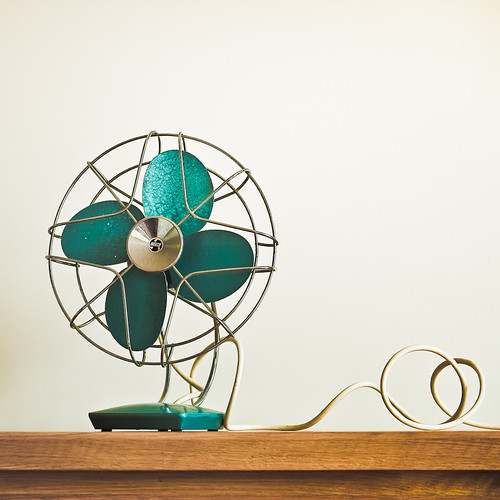
Cuba Gallery: Retro / vintage / fan / wood / photography / Retro furniture / interior / design by ►CubaGallery


source,photo source


Photography isn't just about making memories, it's about art. Be artistic. Here are a few tips and tricks to help you make those photos, picture perfect.

To make those dull photos turn into works of art, consider these questions:
Decide if you want the full subject, half, or even a close up. How much background do you want, or even foreground? Exactly how close do you want that close up? What details do you want to focus on? Do you want a vertical, horizontal, or tilted photograph? What angle do you want? What's the best lighting? What background do you want to use?

1. Placing the subject of interest. Choose how much of the subject you want photographed. (Example: you want full body, half body, or face shot.) If your subject fills the frame then it's okay to center it. If you are trying to get more of the background, try placing your subject to the right or left in the viewfinder. With a horizontal (laying down), try to place them at the top for more foreground, or at the bottom for more background. And you could even tilt the camera for a more funky picture. It all depends on what part of the scenery you want visible in the picture. Maybe you want that tree to your left and your subject to the right. Or the patch of flowers in front and the mountains in back. (I find it best to take my time and take shots of each possible way and several different poses. This way I know I'll find the best photograph with the most potential.)

2. Don't center. The circle, plus sign, or brackets in the middle of your viewfinder is for focusing and isn't necessarily for centering the subject. Placing your subject in t he circle could leave you with a lot of empty and useless space on your photograph. Too much background and not enough subject. If your subject fills the frame then it is okay to center them. (Sometimes you just have to ignore the focus points and concentrate on your subjects placement in the frame instead.)

3. Camera angles. Walk around the subject, shoot from all angles and sides. This will help you to get the best lighting, background, and different aspects of the subject. You will want to find the best angle for all three. Pick a background that will not distract your viewers from the subject of interest. (I choose my backgrounds to where there's not much clutter. Sometimes I will use a plain sheet or blanket and place it behind the subject, but making sure it does not clash or blend.)

4. Reflectors. In some situations you just can't get enough light or you perhaps you just want more. To use a light reflector, place it in a position where it reflects light onto the subject without it getting in the frame. Use this if your shot is coming out too dark or there are too many shadows. On night shots that you need more than your flash can put out, place a lamp (or several) near your subject, but out of sight, and use the light reflectors to bounce from the lamps to where needed. (Some homemade light reflectors can be real cheap to make. You could use white cardboard, or if you can't find this, then simply take any piece and paint it white. For more light, place tin foil over your piece of cardboard, smooth it out, and reflect where needed.)

5. Shading. Using the same piece of cardboard as mentioned above, you can use this to block the light as well. You could make this easier by painting one side white and the other black. Or just place the piece in front of the lamp or sun to dismiss light from your subject. On most cameras you can use a sunshade for the lens, some cameras come with this, some you buy separate. This won't keep light from your subject, but it will block the light from causing a flare effect on the outcome of your photograph. The sunshade just clicks into place around your lens, and keeps the lens safe from any glaring.

6. Outside daylight. Direct sunlight is when you place the sun behind the camera, but in front of the subject. Using direct sunlight can cause shadows on the subjects face and possibly their eyes squinting. Back light is when the sun is behind the subject and in front of the camera. This will lighten the photo and cause much softer features on the subject.

7. Preventing red eye. Red eye is caused when the flash is too close to the lens. Ways to prevent this are: Attach a larger flash to your camera, t his way the flash is further from the lens. Or if buying a camera, look for one with the flash located far from the lens. Try getting closer to your subject when needing the flash. (Before I bought my camera with built in red eye correction, I had to use a photo editing program to correct these problems. I was even scanning my pictures and still having to edit when I was using my film camera that was hopeless against red eye.)

Stephanie Harrison Photography - Where You'll Find the Best Photographer in Town


Edinburgh Photography, Gracemount Flats, High Rise by John Gilchrist


credit


Whether you're looking for that perfect photographer for senior pictures, wedding photos, new baby celebration or special family moments, Stephanie Harrison Photography is the place to go! You'll not only find a professional studio that is conveniently located in the heart of the Historic Depot District in Richmond, Indiana, but you'll meet one of the friendliest, easy going photographers around; not to mention at a great value!

The photographer at Stephanie Harrison Photographer, none other than Stephanie Harrison herself, offers an artistic style that can't be found elsewhere. The results of her work give an eclectic, non-staged, and real feeling. She captures expressions and movements perfectly in her photographs. She's got the perfect personality for children and adults alike. She can accommodate any situation from serious, quiet moments to doing whatever is needed to get an unsure baby to smile, make nervous folks feel comfortable or even catch that wondering gaze of a beloved pet.

Photos aren't always taken inside the studio at Stephanie Harrison Photography. The opportunity is also there to go outdoors and use the resources of the Historic Depot for a more urban look, combining the exposed brick of old buildings with the sweet, fresh face of a new baby, for example. Stephanie is also often available for on-site shoots for weddings, special celebrations and other purposes!

Stephanie Harrison has the experience to make your photo shoot the best it can be! She's been featured in a number of magazines across the world and has won various photography awards. With such skill and recognition one might think her prices would reflect it, but at Stephanie Harrison Photography, the value is unreal!

The session fee is a very reasonable $40.00 for up to four people. Prices for prints obviously vary by size but range anywhere from $8.00 for eight wallets up to $90.00 for a huge 20x30 print! She offers packages for senior pictures starting at a low $99.00 and Wedding Packages that can be had from $550.00. Also available are Gallery Canvas Wraps in various sizes which are, simply put, awesome!

Stephanie Harrison Photography can be found at 195 Fort Wayne Avenue in Richmond, Indiana and reached at (765)962-3133. The website, www.stephanieharrisonphotography.com offers numerous examples of Stephanie's work, a price sheet, bio, and contact information for setting up your first session.

Stephanie Harrison Photography; you simply won't find a better photographer around!